
The latest issue of the Journal of Education and Learning (EduLearn), Volume 20 Number 4, November 2026 edition, presents an in-depth overview of global educational research trends and priorities. This issue extensively explores various educational levels, learner characteristics, teacher competencies, learning technologies, and the dynamics of educational leadership.
Below is a comprehensive analysis of the data distribution, thematic focus, and distinctive research subjects published in this issue:
Educational Context Landscape: Higher Education and Secondary Schools Take Center Stage
Based on the mapping of educational context, higher education dominates this issue. Meanwhile, early childhood education and vocational education remain the least researched levels. This pattern indicates that researchers’ attention is still concentrated on advanced levels, while the foundations of learning in early childhood and vocational pathways remain relatively untouched.
Main Thematic Map: Learning Innovation and Capacity Strengthening
In terms of research focus (educational focus), Teaching and Learning remains the most widely studied theme with 15 articles (22.7%), followed by Student Development (12 articles, 18.2%) and Teacher Development (11 articles, 16.7%). Educational Technology also occupies a significant portion with 10 articles (15.2%), confirming that the integration of technology in learning remains an active concern among researchers. On the other hand, Equity and Inclusion is represented by only 1 article (1.5%), the least touched area among the eight research focuses in this issue.
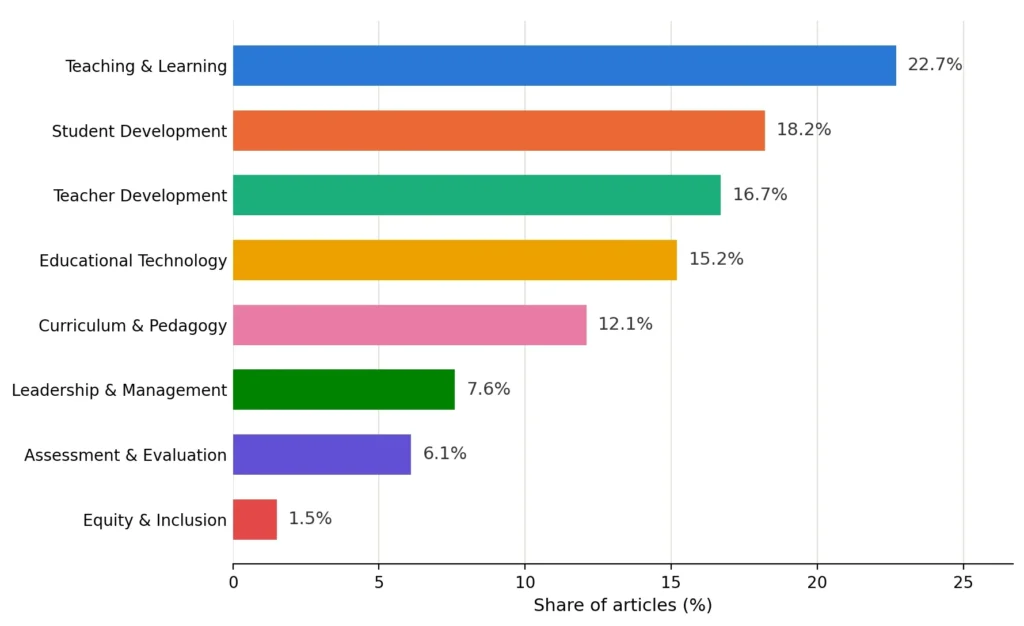
Figure 1. Distribution of research focus in the November 2026 issue
Target Group Demographics & Specific Research Settings
Students constitute the most widely researched group (22 articles, 33.3%), closely followed by teachers and university students (13 articles each, 19.7%). The lecturer group was recorded in 5 articles (7.6%), while 5 other articles (7.6%) discussed teachers and students simultaneously.
Interestingly, 30 out of 66 articles (45.5%) targeted highly specific settings, while the remaining 36 articles (54.5%) discussed subject groups at a more general level.
This diversity of settings indicates that the educational research in this issue does not stop at broad group generalizations, but has begun to touch upon learning and teaching experiences that are far more specific and contextual.
Implications for Educational Practitioners and Researchers
This publication of EduLearn Volume 20 Number 4 confirms that student-oriented studies, based on learners’ immediate needs, along with educator readiness, remain the primary drivers of current educational research. The presence of research targeting specific groups, such as refugee students and engineering students, reflects the diversity of paradigms needed to build an adaptive and inclusive educational ecosystem. Meanwhile, the scarcity of research on equity and inclusion issues, as well as on early childhood and vocational education levels, opens up substantial opportunities for researchers.